
Brass hand tools are used in industrial environments where buyers require corrosion resistance, controlled surface contact or a lower risk of mechanical sparking than conventional carbon steel tools. In the United Arab Emirates, these tools may be purchased for oil and gas facilities, petrochemical plants, marine maintenance, utilities, workshops and industrial construction projects.
Selecting a brass hand tools supplier should not be based only on tool appearance or unit price. Buyers must confirm the alloy, mechanical strength, dimensional accuracy, intended working load and whether the tools meet any required non-sparking or hazardous-area specifications.
A reliable supplier should be able to provide clear technical data, material certificates, inspection records and product customization rather than offering tools under a general “brass” description.
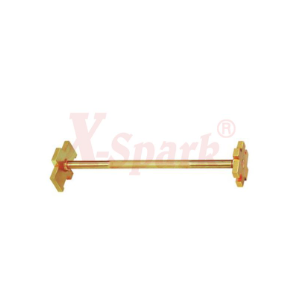
Brass hand tools are tools manufactured wholly or partly from a copper-zinc alloy. Depending on the alloy composition and manufacturing method, brass can provide:
Resistance to corrosion and moisture
Reduced risk of damaging softer components
Lower magnetic response than many steel tools
Decorative or clean surface appearance
Lower mechanical sparking tendency than carbon steel
However, standard brass tools should not automatically be described as certified non-sparking tools. For hazardous areas, buyers must verify the exact alloy, testing method and certification required by the project.
In some applications, aluminum bronze or beryllium copper tools may be selected instead because they can provide greater strength and more clearly defined non-sparking performance. The correct material depends on the operating environment and required tool load.
A supplier may offer standard tools or manufacture products according to drawings and samples.
Brass hammers are commonly used where steel impact tools could mark, deform or damage the surface of a component.
Typical applications include:
Equipment assembly
Die and mold adjustment
Shaft and bearing installation
Marine maintenance
Machine-tool setup
Precision fitting work
Buyers should specify the head weight, handle material, overall length and whether replaceable striking faces are required.
Brass wrenches may be considered for maintenance work involving sensitive surfaces or special industrial environments.
Available styles can include:
Open-end wrenches
Combination wrenches
Adjustable wrenches
Hook spanners
Striking wrenches
Valve wrenches
Custom-profile spanners
The required opening size, handle length and maximum torque should be confirmed before purchasing.
Brass or copper-alloy gripping tools may be used where surface scratching and magnetic contamination are concerns.
Products may include:
Combination pliers
Long-nose pliers
Cutting pliers
Locking pliers
Pipe-gripping tools
Custom clamps
Because brass is softer than hardened steel, buyers should confirm whether the tool is intended for gripping, positioning or cutting.
Brass screwdrivers can be produced for specialized maintenance, electrical equipment or sensitive components.
Important specifications include:
Slotted or Phillips tip
Tip dimensions
Shaft diameter
Overall length
Handle insulation
Torque requirements
A brass screwdriver should not be assumed to provide electrical insulation unless the handle and complete tool have been tested for that purpose.
Brass scrapers are often used to remove deposits without severely damaging steel or other harder surfaces.
Applications may include:
Gasket removal
Equipment cleaning
Marine maintenance
Paint and residue removal
Mold cleaning
Surface preparation
The scraper edge, hardness and thickness should be matched to the material being cleaned.
The material designation is one of the most important purchasing considerations.
| Material | General Characteristics | Typical Purchasing Consideration |
|---|---|---|
| Brass | Corrosion-resistant, relatively soft and easy to machine | Suitable for non-marring and moderate-load applications |
| Aluminum Bronze | Higher strength and wear resistance than many brass alloys | Often selected for heavy-duty industrial and non-sparking tools |
| Beryllium Copper | High strength with low sparking and non-magnetic properties | Used in specialized hazardous or precision environments |
| Carbon Steel | High strength and broad tool availability | Not suitable where sparking, corrosion or surface marking is a concern |
| Stainless Steel | Good corrosion resistance and mechanical strength | May still create sparks and can be magnetic depending on grade |
Beryllium copper requires controlled manufacturing and occupational safety procedures. Buyers should request alloy and safety documentation rather than selecting it only by product name.
Oil and gas maintenance may require tools for valve operation, flange work, equipment inspection and routine servicing.
When tools are intended for potentially explosive atmospheres, the buyer should specify:
Hazardous-area classification
Gas or vapor group
Project standard
Required test reports
Tool alloy
Maximum operating load
Do not accept a generic “spark-proof” statement without supporting documents.
Chemical-processing environments can expose tools to moisture, chemicals and corrosive residues. Material compatibility should be confirmed for the actual chemical rather than assuming all copper alloys are resistant to every substance.
The UAE’s ports, shipyards and offshore operations create demand for corrosion-resistant maintenance tools.
Brass hand tools may be considered for:
Marine-engine maintenance
Propeller and shaft work
Deck equipment
Pump servicing
Valve maintenance
Precision fitting
Saltwater exposure makes surface protection and storage conditions important even for corrosion-resistant alloys.
Some brass tools may be used around electrical, power-distribution or communication equipment because of their corrosion resistance or lower magnetic response.
However, brass is electrically conductive. It must not be treated as an insulated tool unless the product has an approved insulated handle and applicable test certification.
Brass hammers, punches and non-marring tools can support installation work where steel tools might damage finished surfaces, machine components or decorative hardware.
A professional quotation should include more than the tool name and quantity.
| Parameter | Information to Confirm |
|---|---|
| Tool Type | Hammer, wrench, pliers, screwdriver, scraper or custom tool |
| Material | Exact brass or copper-alloy grade |
| Manufacturing Method | Forging, casting, machining or combined process |
| Tool Size | Complete dimensions and working-end size |
| Weight | Unit weight and permissible tolerance |
| Hardness | Required range according to the alloy and application |
| Working Load | Maximum torque, impact load or gripping force |
| Surface Finish | Natural, polished, plated, coated or customized |
| Handle | Wood, fiberglass, rubber-coated, insulated or metal |
| Testing | Material, dimensional, hardness, torque or impact testing |
| Certification | Project-specific non-sparking or hazardous-area documentation |
| Branding | Cast logo, engraving, laser marking or printed label |
| Packaging | Individual box, tool set, foam tray or export carton |
| Quantity | Trial quantity and estimated annual demand |
Copyright © Hebei Botou Safety Tools ( Groups) Co., Ltd. All Rights Reserved | Sitemap

 中文
中文